French Pattern Paving
The Timeless Modular Stone Layout for Elegant Outdoor Spaces
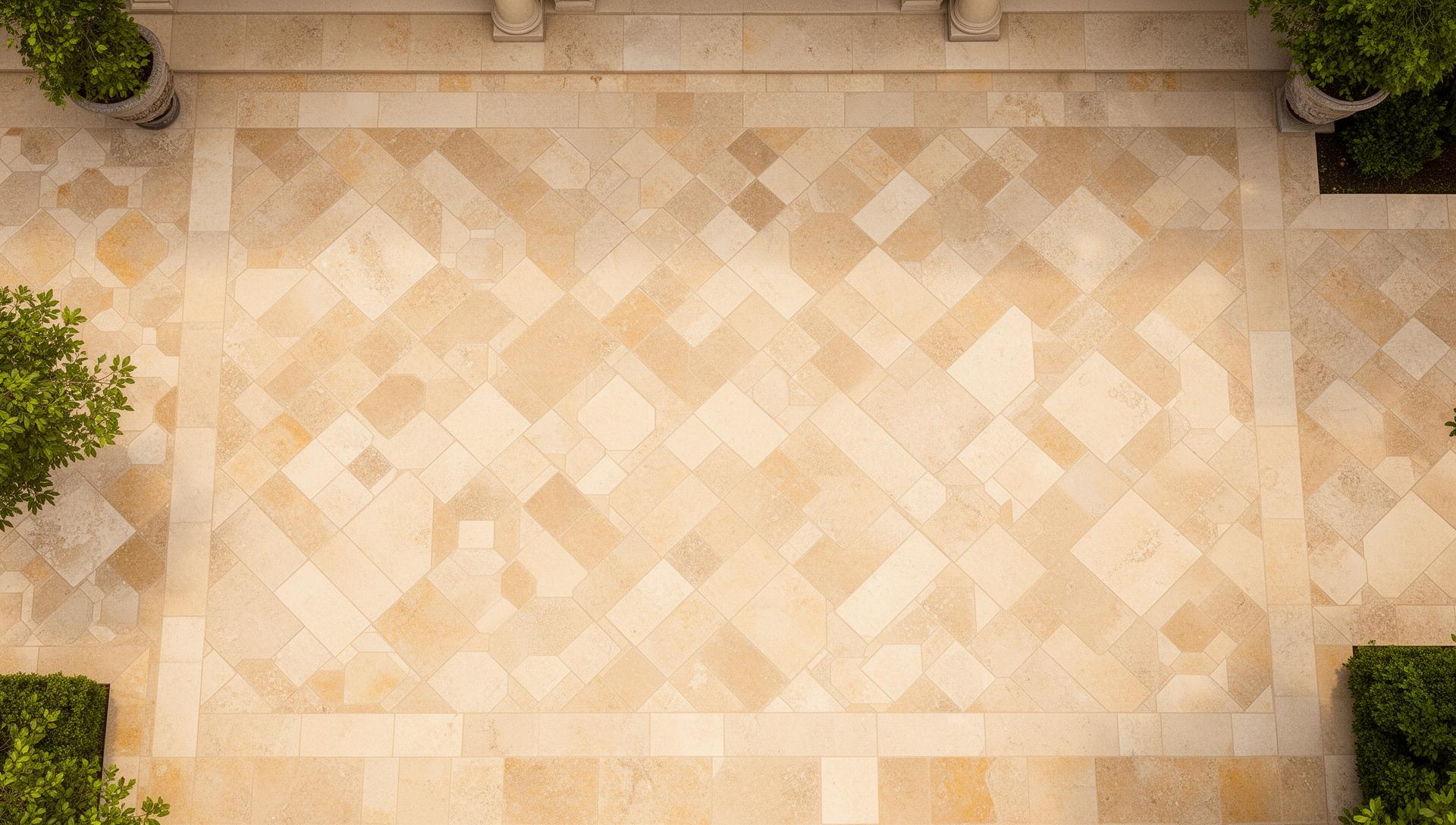
French pattern paving, also known as the Versailles pattern, is one of the most celebrated and enduring stone layout systems in architectural design. Rooted in centuries of classical craftsmanship, this modular paving system combines four distinct tile sizes to create a visually dynamic, non-repeating surface that transforms any outdoor space into an elegant statement. Whether you're designing a residential patio, a grand courtyard, or a commercial plaza, French pattern paving delivers a timeless aesthetic that balances structure with natural beauty. Discover why architects and designers worldwide continue to choose this iconic layout for their most prestigious projects.
What is French Pattern Paving?
French pattern paving is a sophisticated modular stone layout system that uses four different tile sizes arranged in a precise, interlocking configuration. Unlike standard grid layouts that rely on uniform tiles, the French pattern—also widely known as the Versailles pattern or opus pattern paving—creates visual interest through calculated variation. Each set of tiles includes small, medium, large, and extra-large rectangular and square pieces that fit together in a repeating geometric module.
The origin of this pattern traces back to the Palace of Versailles in France, where it was first employed to pave the grand courtyards and promenades of the French royal court. The layout was designed to break the monotony of uniform stone surfaces while maintaining structural integrity and aesthetic harmony. Over centuries, the pattern has evolved from palace floors to become one of the most requested paving layouts for residential and commercial outdoor spaces worldwide.
What makes French pattern stone truly distinctive is its mathematical precision. The four tile sizes are carefully calculated so that they interlock without requiring cuts or waste material. This modular system means that each repeating unit—typically covering approximately 1.5 to 2 square meters—can be replicated infinitely across any surface area. The result is a surface that appears organic and varied, yet follows a strict geometric logic that ensures perfect alignment and minimal grout lines.
Today, French pattern limestone from CIDG is available in five Egyptian stones as pre-calibrated opus pattern sets, making installation more accessible than ever. Whether you're working with a landscape architect on a grand estate or planning a modest French pattern patio, the Versailles layout delivers an unmatched combination of elegance, durability, and design sophistication that no single-size tile can achieve.
French Pattern Paving in Egyptian Limestone
Our French pattern paving is supplied by CIDG, a natural stone company in Cairo, in five Egyptian limestones. Each stone comes as large and small opus pattern sets, paving slabs and cut-to-size pieces, in 2 cm and 3 cm thickness, and is certified CE and SGS. Free samples are available, and we send quotes within 24 hours.
Dijon Tumbled Limestone
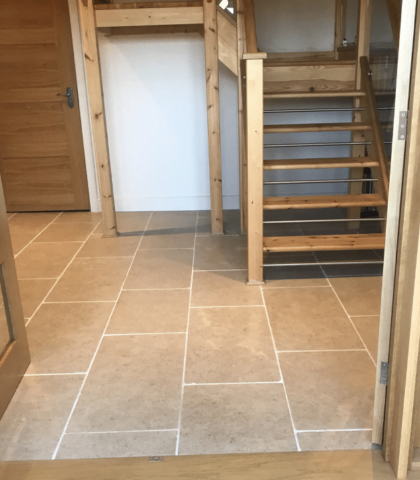
Dijon Tumbled Limestone is a warm beige stone with golden undertones and natural shading. The tumbled finish gives each piece an antiqued look, and it works well on patios and around pools.

Triesta Tumbled Limestone
Triesta is an Egyptian limestone with a tumbled, antiqued finish. It is a good fit for courtyards and terraces laid in the French pattern.

Sinai Pearl Limestone
Sinai Pearl is a beige Egyptian limestone that suits both patios and interior floors, so one stone can carry the pattern from the house out to the garden.

Galala Limestone
Galala is an Egyptian limestone in soft beige tones. It is used on terraces and in interiors.

Nile Grey Limestone
Nile Grey is a soft, cool grey Egyptian limestone with gentle tonal variation. It suits contemporary designs.
Why French Pattern is Ideal for Outdoor Paving
Visual Movement
The varied tile sizes create natural visual flow, guiding the eye across the surface and adding depth to any outdoor space.
Breaks Monotony
Unlike uniform grid layouts, French pattern paving prevents the repetitive, industrial appearance that single-size tiles can create.
Elegant Aesthetic
Rooted in centuries of classical architecture, the Versailles stone pattern communicates sophistication and timeless taste.
Works in Large Spaces
The modular system scales beautifully across expansive areas, maintaining visual interest without overwhelming the design.
Reduces Visible Joints
The varying tile sizes distribute joint lines irregularly, minimizing the grid-like appearance that draws attention to grout lines.
Royal Heritage
Choosing French pattern paving connects your project to a legacy of craftsmanship that dates back to the Palace of Versailles.
Applications of French Pattern Paving
Patios
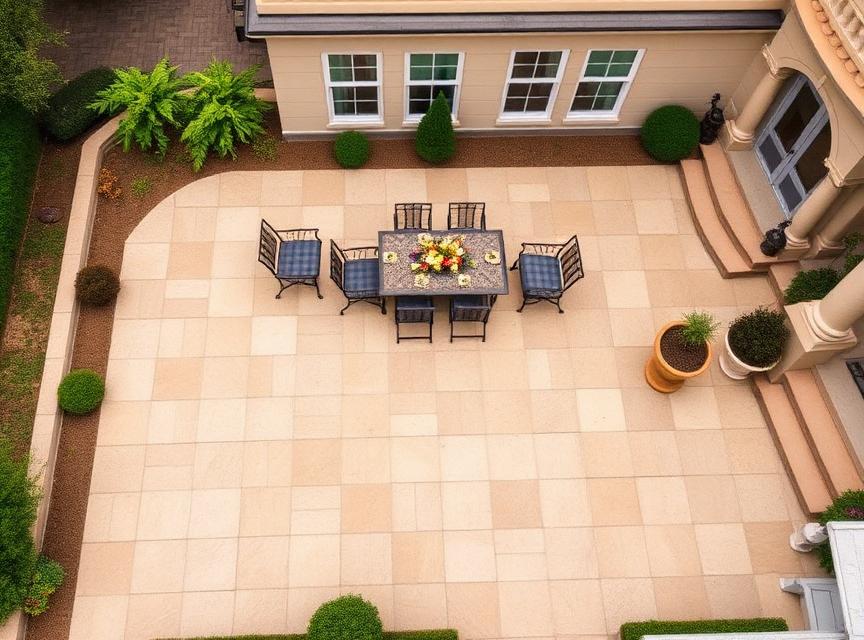
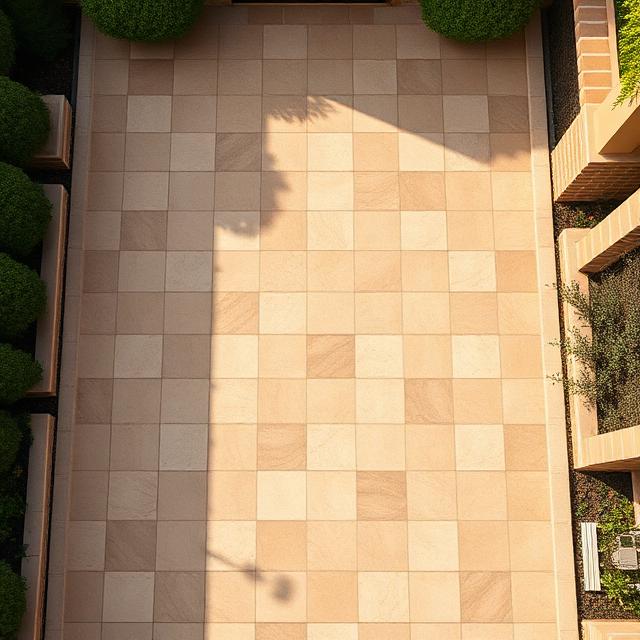
Create an inviting outdoor dining and entertainment area with the warmth and character of Versailles pattern paving. The modular layout adds visual interest to residential patios of any size.
Pool Surrounds
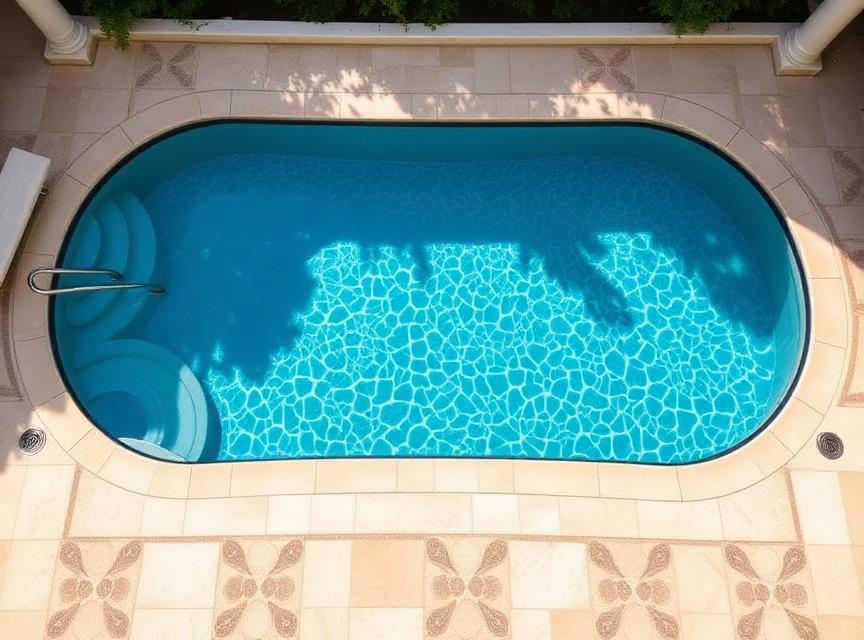
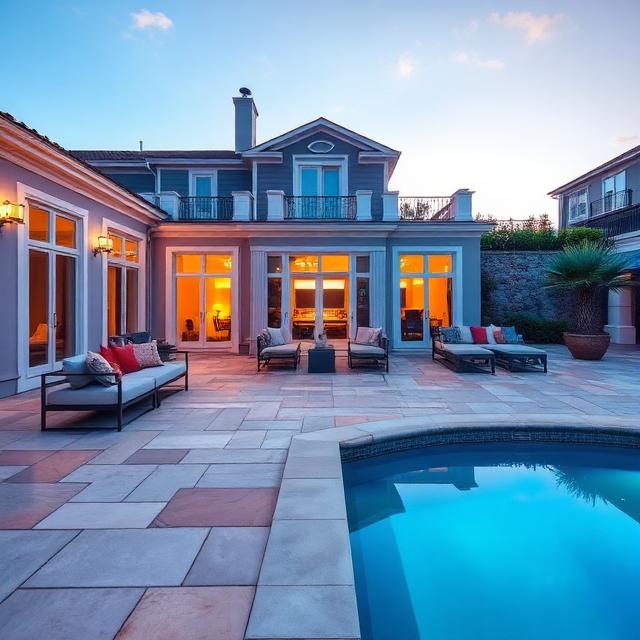
Dijon Tumbled Limestone laid in the French pattern is a natural fit for pool decks and surrounds, with a warm, textured surface around the water.
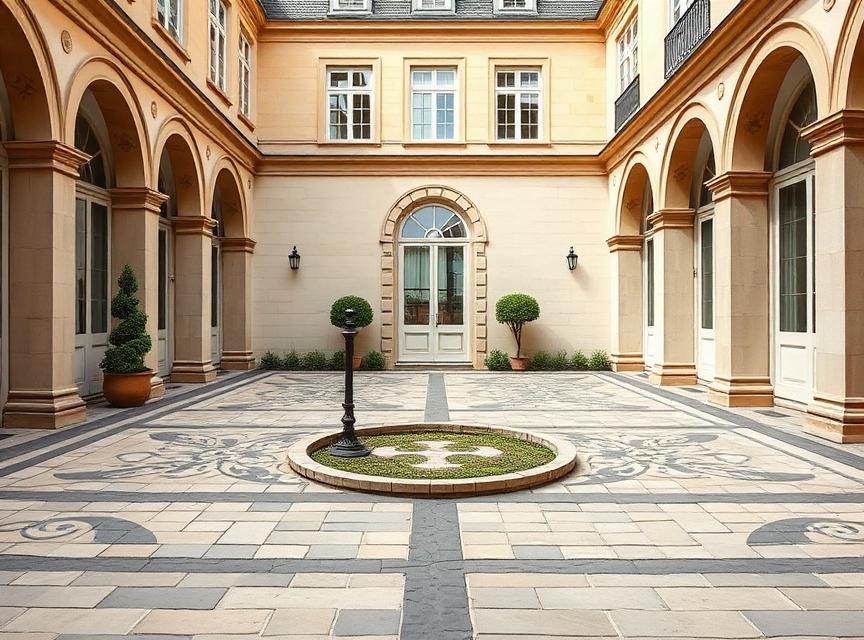
Courtyards
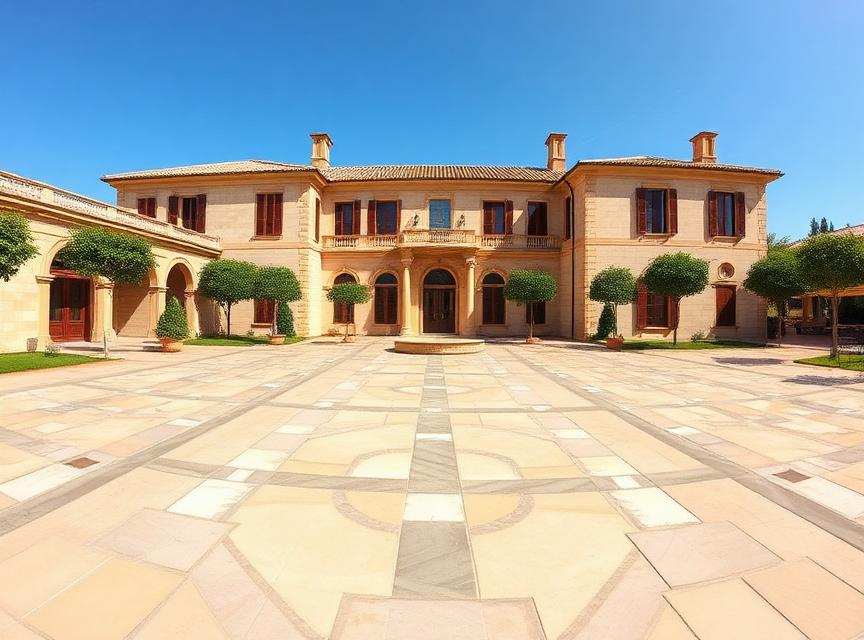
Transform entrance courtyards into grand statements with opus pattern paving. The geometric layout creates a sense of arrival and prestige that welcomes visitors.
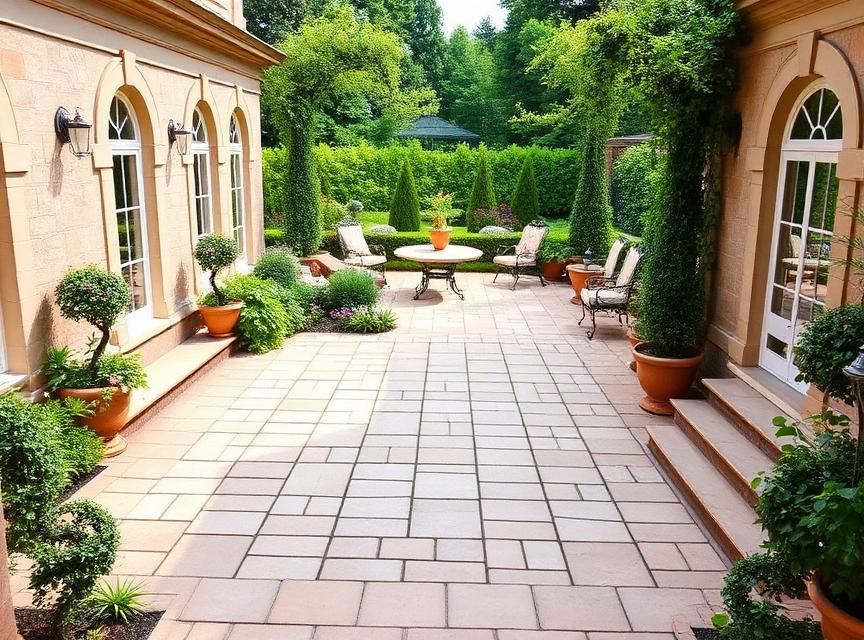
Garden Terraces
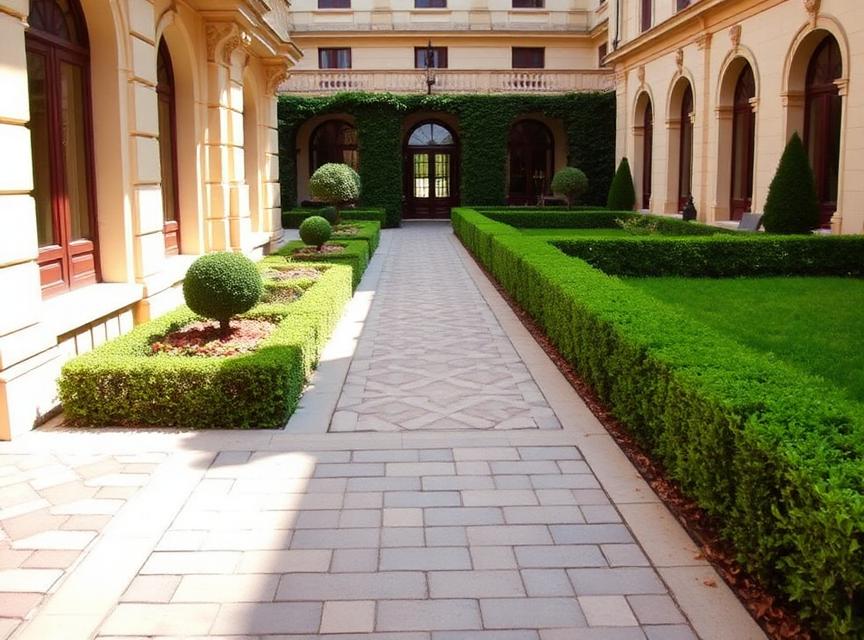
Blend indoor elegance with outdoor living through French pattern slabs on garden terraces. The natural stone integrates beautifully with landscaping and greenery.
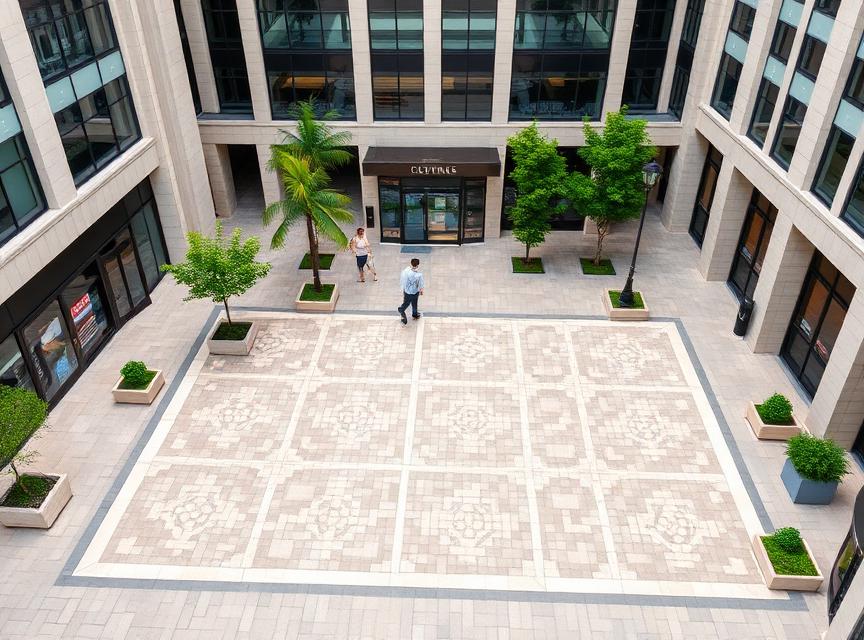
Commercial Plazas
For large-scale commercial projects, French pattern outdoor paving delivers sophisticated design across expansive areas while maintaining practical durability for high-traffic zones.
French Pattern vs Standard Grid Layout
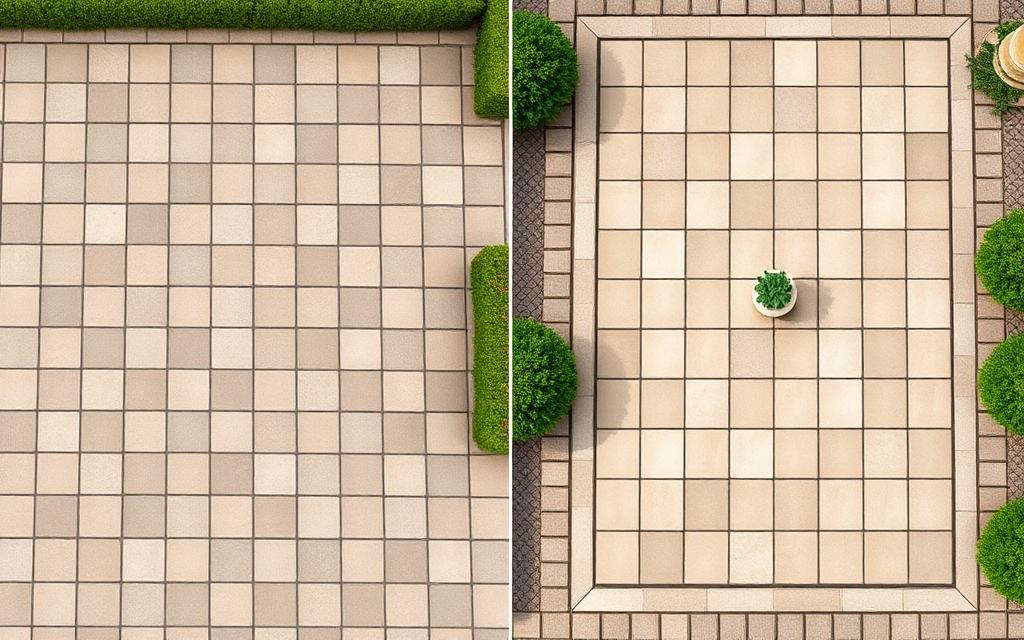
| Feature | French Pattern | Standard Grid |
|---|---|---|
| Visual Appeal | High – varied, organic appearance | Low – uniform, repetitive |
| Design Impact | Strong – creates focal points | Minimal – background surface |
| Installation Complexity | Moderate – requires layout planning | Simple – uniform placement |
| Cost | Moderate to high | Lower – standard sizing |
| Space Perception | Expands visual space | Can feel confined |
| Joint Visibility | Minimal – irregular distribution | Prominent – visible grid lines |
Installation Guide for French Pattern Paving
Base Preparation
Excavate to the required depth (typically 200–300mm) and compact a crushed rock base. Ensure proper drainage gradient of 1–2% away from structures. A well-prepared base is the foundation of any lasting French pattern installation.
Dry Layout Preview
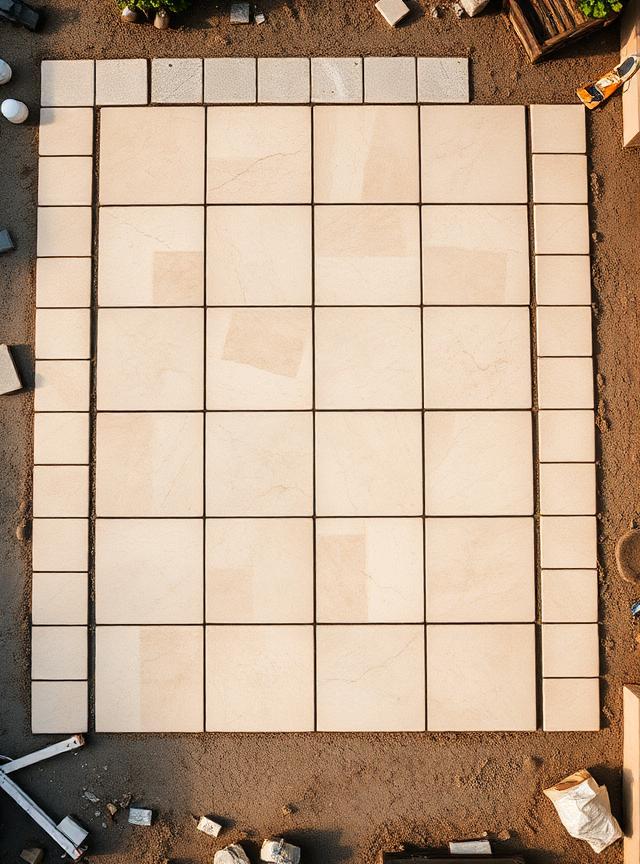
Before laying with adhesive or mortar, arrange a complete module dry to verify the pattern alignment and tile placement. This step prevents costly errors and allows you to visualize the final result.
Spacing & Alignment
Use consistent spacers (typically 3–5mm) between tiles. Align the module grid lines with string lines to maintain straight edges. Check alignment every 2–3 modules to prevent cumulative drift.
Leveling
Use a screed bed of sand-cement mix or tile adhesive depending on your substrate. Check levels continuously with a spirit level, maintaining the drainage gradient throughout.
Jointing
Fill joints with a polymeric sand or grout suitable for your stone type. Work diagonally across joints to ensure complete fill. Remove excess material before it sets.
Sealing
Apply an appropriate penetrating sealer to protect against staining and moisture damage. Allow 24–48 hours of curing before sealing. Reapply every 2–3 years for optimal protection.
French Pattern Paving Pricing Guide
The cost of French pattern paving varies significantly based on several key factors. Understanding these variables helps you plan your budget effectively and make informed decisions about materials and installation.
Stone Type & Quality
The choice of stone is the largest factor affecting price. CIDG prices each of its five Egyptian limestones for French pattern paving according to grade, finish, thickness and quantity. First-choice, select-grade stone with consistent colouring costs more than commercial-grade material. Send us your project details and we will reply with a quote within 24 hours.
Thickness & Finish
Standard 20mm tiles are suitable for adhered installations on concrete slabs, while 30mm tiles are required for sand-bed installations or heavy-traffic areas. Thicker tiles cost approximately 30–50% more. Surface finishes also affect pricing—tumbled and brushed finishes, which provide better slip resistance and a more natural appearance, typically add $5–$15 per square meter compared to honed finishes.
Pattern Cutting & Calibration
Pre-calibrated French pattern sets, where all four tile sizes are precision-cut to consistent thickness, are essential for professional results. Calibrated sets cost more than uncalibrated tiles but save significantly on installation time and adhesive usage. Budget $5–$10 per square meter for calibration.
Installation Labor
Professional installation of French pattern paving typically costs $50–$100 per square meter, depending on site complexity, base preparation requirements, and your location. The modular layout requires skilled installers familiar with the Versailles pattern—this is not a standard tile job. Budget additional costs for base preparation ($20–$40/m²), jointing ($5–$10/m²), and sealing ($5–$15/m²).
Export & Shipping Costs
CIDG ships from Egypt, so freight depends on your destination port and order size. Container loading, customs clearance, and local delivery should all be factored into your total project budget.
French Pattern Paving Gallery
Frequently Asked Questions
French pattern paving is a modular stone layout system that combines four different tile sizes—small (200×200mm), medium (200×400mm), large (400×400mm), and extra-large (400×600mm)—arranged in a repeating geometric configuration. Also known as the Versailles pattern or opus pattern, it creates a visually dynamic surface that appears random but follows precise mathematical proportions.
A standard French pattern set includes four tile sizes: 4 small squares (200×200mm), 2 medium rectangles (200×400mm), 2 large squares (400×400mm), and 1 extra-large rectangle (400×600mm). Together, these 9 tiles form one complete module covering approximately 1.62 square meters.
French pattern is one of the best choices for patios. The varied tile sizes create visual interest in outdoor living spaces, and the natural stone materials offer excellent durability and weather resistance. The pattern works beautifully in both small intimate patios and large entertaining areas.
French pattern installation requires moderate skill and careful planning. The key challenge is maintaining the correct pattern sequence and alignment across the surface. We recommend a dry layout before fixing tiles permanently. Professional installation is advised for the best results, as the modular system requires precision that goes beyond standard tile laying.
French pattern paving typically costs 15–30% more than standard grid paving due to the multiple tile sizes required and the increased installation complexity. However, the superior aesthetic result, minimal waste (since sets are pre-calculated), and long-term durability make it excellent value for premium outdoor spaces.
Yes, French pattern paving works beautifully indoors. It's commonly used in entryways, living areas, and conservatories. For indoor use, honed or polished finishes are preferred over tumbled finishes. Thinner 12–15mm tiles can be used on interior concrete slabs, reducing both material cost and floor height buildup.
Sealing is highly recommended for all natural stone French pattern paving, especially outdoors. A quality penetrating sealer protects against water absorption, staining, and freeze-thaw damage. Apply sealer after installation and reapply every 2–3 years. Indoor installations may need less frequent resealing depending on traffic levels.
CIDG supplies French pattern paving in five Egyptian limestones: Dijon Tumbled, Triesta Tumbled, Sinai Pearl, Galala and Nile Grey. Dijon Tumbled has warm beige and golden tones for patios and pool surrounds, Nile Grey suits contemporary designs, and Sinai Pearl and Galala work both outdoors and on interior floors.
For outdoor installations, 20mm thickness is suitable for adhesive-fixed applications on a concrete slab base. For sand-bed or pedestal installations, 30mm thickness is recommended for adequate structural strength. Commercial applications may require 40mm+ thickness depending on expected traffic loads.
When properly installed and maintained, natural stone French pattern paving can last 50–100+ years. Natural stone is one of the most durable building materials available. The key to longevity is correct base preparation, appropriate drainage, quality installation, and regular sealing. Many historic buildings feature Versailles pattern floors that have endured for centuries.
Transform Your Outdoor Space with French Pattern Paving
Ready to bring the elegance of the Versailles pattern to your project? Get in touch for expert guidance, material samples, and custom pricing tailored to your specific requirements.